
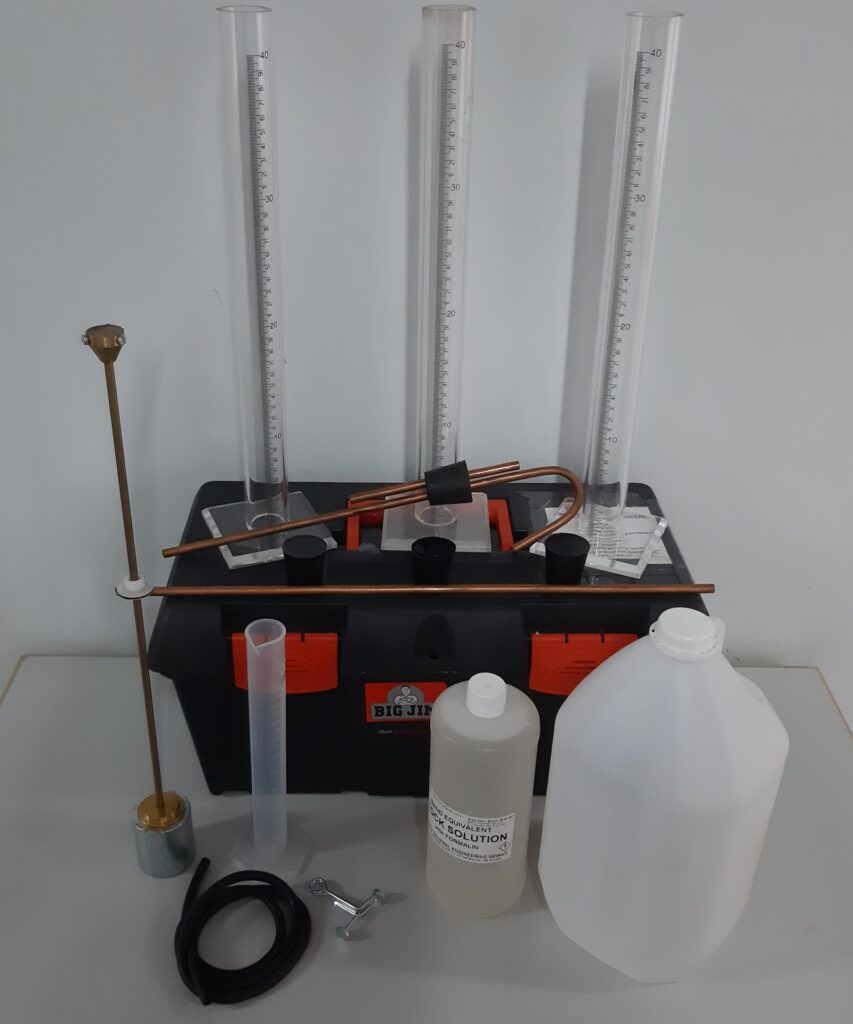
Sand equivalent apparatus is used to determine the ratio of sand to clay-like or plastic fines in a granular material, like sand or soil,. It’s a rapid field test that helps assess the quality and suitability of these materials for applications like pavement construction, where excessive fines can lead to issues like instability or stripping.
Here’s a more detailed explanation:
-
Purpose:The primary function of the sand equivalent test is to measure the relative amount of undesirable clay-like or plastic fines in a sample of sand or soil.
-
How it works:The test involves mixing a sample of the material with a special solution, shaking it vigorously, and then measuring the height of the settled sand and the clay suspension in a graduated cylinder.
-
Interpretation:The “Sand Equivalent” value is calculated by dividing the sand height by the clay height and multiplying by 100. Higher sand equivalent values indicate cleaner materials with fewer fines.
-
Importance:This test is crucial in construction, particularly in asphalt and concrete mixing, as excessive fines can negatively impact the performance and durability of the final product.
-
Standards:The sand equivalent test is standardized by organizations like ASTM and AASHTO, providing a consistent method for evaluating material quality.
The apparatus contained in a carrying case consist of:
- 1m Rubber tubing
- 1 x Tubing clamp
- 1 x Rubber bung with brass piping
- 3 x Rubber stoppers
- 1L Stock Solution
- 3 x SE Cylinders
- 1x 100ml Plastic Measuring Cylinder
- 1x SE Weighted foot assembly
- 1x 5L Plastic Bottle