
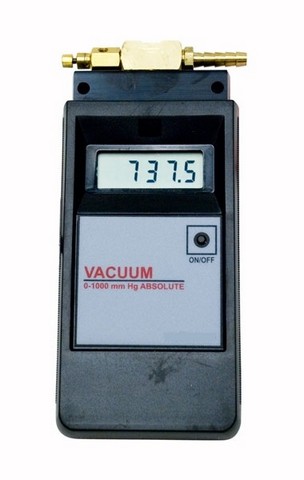

Digital manometers are electronic devices used to measure and display the pressure of gases or liquids. They offer a digital readout, making them convenient for various applications like monitoring HVAC systems, gas pressure, and even in medical settings for blood pressure monitoring.
Here’s a more detailed overview:
-
HVAC Systems:
Digital manometers are essential for diagnosing and balancing air conditioning and heating systems, helping technicians identify issues like pressure drops across filters or airflow problems.
-
Gas Pressure Monitoring:
They are used in various applications, including gas leak detection, calibrating gas appliances, and monitoring propane-powered devices.
-
Industrial Processes:
In industrial settings, digital manometers can monitor pressure in pipes, pumps, and other equipment, ensuring proper operation and preventing malfunctions.
-
Medical Applications:
Digital manometers, often part of blood pressure monitors, are used in healthcare to track and manage patient health.
-
Research and Development:
They are valuable tools for research and development in fields like fluid dynamics and thermodynamics.
-
Accuracy and Precision:
Digital manometers can provide precise pressure measurements with minimal human error.
-
Digital Display:
The digital display makes it easy to read and interpret pressure values, eliminating any ambiguity that might arise with analog gauges.
-
Data Logging and Analysis:
Many digital manometers can be connected to computers or other data logging devices, enabling the collection and analysis of pressure data over time.
-
Versatility:
They can be used to measure a wide range of pressures, from low vacuum to high pressures, and can be adapted to various applications.
-
Portability:Lightweight and portable design makes them suitable for field work and quick measurements.
The Digital Absolute Pressure Manometer meets the requirements of ASTM D2041/AASHTO T209 to measure specific gravity and density of asphalt mixtures, often called the Rice Test. The gauge is also useful for other applications to measure and display air pressure (vacuum) in a range from 0 to 1000mm of mercury (Hg) with resolution to 0.01mm Hg.
Factory calibrated prior shipping, undergo a multi-point calibration at 25, 30 and 35mm Hg. SANAS Calibration available on request (separate).
Can be operated with a 9-volt alkaline battery for approximately 80 hours of continuous use or powered by a 115V/60Hz electrical supply using the AC adapter provided.
The gauge display is factory set to shut off after approximately 18 minutes to conserve battery life.
NOTE:
The Manometer is a very sensitive and accurate instrument designed for use with only dry, non corrosive gases. Mishandling or abuse can compromise operation and performance. Do not allow the gauge to come in contact with any liquid.
Specific Gravity of Asphalt
Several AASHTO and ASTM standards govern the measurement of the specific gravity of asphalt, also known as theoretical maximum specific gravity, or simply the Rice Test. Test methods AASHTO T 209 and ASTM D2041 determine theoretical maximum specific gravity and density values used to calculate air voids in the compacted mix and establish targets for compaction during laydown.
Percent Air Voids in Asphalt
The test results also allow calculation of bitumen absorption by mineral aggregates. If the percent air voids are too low, rutting and shoving of the pavement can happen. If the percentage of air voids is too high, the pavement can be subject to moisture damage, exhibit decreased strength, and have a shorter fatigue life when compared to pavements with correct air void percentages.
These standards define density as “the mass of a cubic meter of the material at 25°C in SI units,” and specific gravity as “the ratio of a given mass of material at 25°C to the mass of an equal volume of water at the same temperature.” Many state DOTs also have state-specific test procedures, in addition to the ASTM and AASHTO standards. This blog post will explore the basics of what to know about the specific gravity of asphalt, what equipment is needed, and how it gets the job done with the Rice Test.
What is the Asphalt Rice Test?
The Asphalt Rice Test is a routine test performed by asphalt producers, state departments of transportation, and testing labs. Reliable results from this test method depend on competent personnel, and the selection of quality equipment can have a direct impact on test results. Choosing equipment that minimizes human input variables will increase the accuracy and repeatability of this test, as well as increase lab efficiency.
Click Below for Operating Manual: