
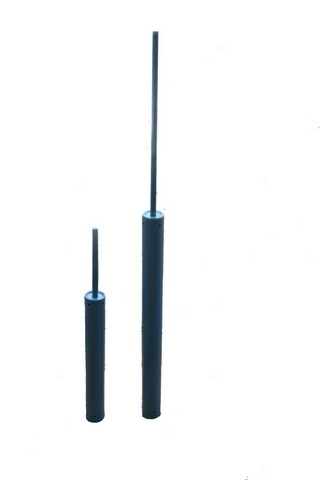
Manual compaction hammers are primarily used to compact soil samples in laboratory settings, typically for tests like the Proctor compaction test, which determines the optimal moisture content and maximum dry density of a soil. These hammers, manually operated, help to reduce air voids and increase soil density within a compaction mold, facilitating accurate testing and analysis.
Here’s a more detailed look:
-
Determining Maximum Dry Density:
The primary use of manual compaction hammers is to achieve the maximum dry density of a soil sample within a controlled environment.
-
Proctor Compaction Test:
These hammers are essential for conducting Proctor compaction tests, which are used to determine the relationship between moisture content and dry density of soil.
-
CBR Specimens:
They can also be used to prepare California Bearing Ratio (CBR) specimens for pavement design.
-
Manual Operation:
Manual compaction hammers are operated by hand, with the operator typically using the hammer to repeatedly strike the soil within a compaction mold.
-
Controlled Compaction:
The hammer is designed to deliver a specific amount of force and energy with each strike, ensuring consistent and controlled compaction.
-
Proctor Mold:
The soil sample is placed in a Proctor mold, which is a standardized cylindrical container.
-
Sliding Weight:
Some hammers utilize a sliding weight mechanism, where the hammer strikes the soil after a specific drop height, ensuring consistent energy transfer.
-
Vent Holes:
Guide sleeves with vent holes allow for the release of trapped air during compaction, ensuring a consistent and accurate process.
Guide sleeve with vent holes. According to SANS Spec.
- Mod Hammer – 4500g, 460mm height, 50mm diameter
- Proctor Hammer