
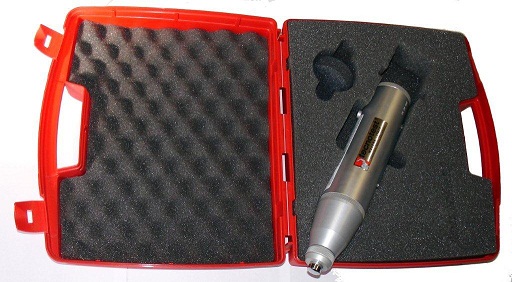
Concrete N-type test hammers, also known as Schmidt hammers or rebound hammers, are non-destructive testing devices used to estimate the compressive strength and uniformity of concrete.They operate by measuring the rebound of a steel plunger after striking the concrete surface, providing a quick and practical method for assessing concrete quality in-situ.
Key Applications:
-
Strength Estimation:N-type hammers can provide a quick and cost-effective estimate of concrete compressive strength, though it’s important to note that a correlation needs to be established between rebound values and actual compressive strength.
-
Uniformity Assessment:They can be used to identify areas of poor quality or deterioration in concrete structures by mapping the rebound values across the surface.
-
Early Age Strength Determination:N-type hammers can be used to assess concrete strength before formwork removal or for other purposes where quick strength evaluation is needed, says Gilson Company.
-
Quality Control:They provide a non-destructive method for monitoring concrete curing and ensuring that strength meets design specifications.
-
Other Materials:While primarily used for concrete, some models can also be used to test the hardness of other materials like rock.
How it Works:
- The hammer is pressed against the concrete surface, and a plunger is released, striking the concrete.
- The rebound of the plunger after impact is measured and recorded as a rebound value.
- This rebound value is correlated with the concrete’s compressive strength using a calibration curve or table,.
- The hammer can also be used to map the uniformity of concrete by recording rebound values across the surface.
Advantages:
- Non-destructive: They don’t damage the concrete structure being tested.
- Quick and Easy: They provide rapid results with simple operation.
- Portable: They are typically lightweight and portable, allowing for on-site testing.
- Cost-effective: They are a relatively inexpensive method for assessing concrete strength.
NON – DESTRUCTIVE TESTING
Used to obtain an estimate of strength and quality of hardened concrete.
Supplied complete with carborundum stone and plastic carrying case.
Strength range 10 to 70 N/mm2 (100 to 700 kgf/cm2)
Test Anvil
Made of special steel, for routine checks on concrete test hammer.

Click Below for Operating Manual: