
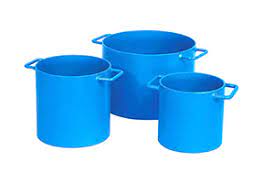
Bulk density containers are primarily used to measure and assess the packing characteristics of powdered or granular materials, like pharmaceuticals, chemicals, or soil.This information is crucial for various applications, including formulation development, manufacturing processes, and ensuring consistent product quality.
-
Formulation Development:
Bulk density is used to determine how much powder can fit into a specific space, like a tablet press or a capsule filler.
-
Manufacturing Processes:
It helps in optimizing manufacturing processes by understanding how powders pack and flow, impacting things like tablet compaction or capsule filling.
-
Quality Control:
Bulk density measurements can reveal lot-to-lot variations in raw materials and ensure consistent product quality.
-
Storage and Transportation:
Bulk density helps determine how much material can fit in a container or bulk bag, optimizing storage and transportation costs.
-
Engineering and Agriculture:
In engineering, bulk density is used to calculate soil compaction for foundations, while in agriculture, it influences root growth and soil permeability.
- Initial Bulk Density: Measured when powders are gently poured into a container.
- Tapped Density: Measured after the container is subjected to a tapping procedure, which simulates the packing of powders in a container.
- A graduated cylinder is commonly used to measure bulk density. The powder is poured into the cylinder, and the volume it occupies is measured.
- Tapped density is measured by tapping the cylinder after a set number of taps, allowing the powder to settle and pack down.
-
Particle Size and Shape:
Smaller, irregularly shaped particles tend to pack better and have a higher bulk density.
-
Particle Porosity:
The presence of voids within the particles themselves can affect bulk density.
-
Compaction:Tapping or vibration can cause powders to pack down, increasing bulk density.
Round metal cylinders with handles. Flat bottom.
- 3 Litres
- 7 Litres
- 15 Litres