
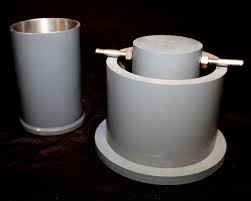

The Aggregate Crushing Value (ACV) test determines a material’s resistance to crushing under a gradually applied compressive load. It’s used to assess the strength of coarse aggregates, ensuring they meet quality standards for various construction applications, particularly in roads and pavements. A lower ACV indicates a stronger aggregate, while a higher value suggests weaker material.
Here’s a more detailed look:
-
Quality Control:
The ACV test is a crucial component of quality control in aggregate production and use, ensuring materials meet specific strength requirements for pavement durability.
-
Material Suitability:
It helps determine if an aggregate is suitable for specific applications, such as surface courses or base layers, where different strength requirements exist.
-
Predicting Performance:
By measuring resistance to crushing, the ACV test helps predict how well aggregates will withstand the stresses and strains of traffic and other loads in a pavement.
-
Road Construction:
Aggregates with lower ACV values are preferred for road construction as they are more resistant to crushing under traffic and roller compaction, leading to a longer pavement lifespan.
-
Concrete:
Aggregates used in concrete mixes are also evaluated for their ACV to ensure the concrete’s overall strength and durability.
-
Other Applications:
ACV is also relevant in other construction applications where aggregate strength is a key factor, such as in the construction of retaining walls or other structures.
-
Sieve Size:
The test typically focuses on coarse aggregates, often those passing a 15.0 mm sieve and retained on a 10.0 mm sieve.
-
Load Application:
A controlled compressive load is applied to a sample of aggregate, and the amount of material crushed to a finer size is measured.
-
Standardized Conditions:
The test is conducted under standardized conditions to ensure consistent results.
-
Interpretation:
A lower ACV (typically below 30%) indicates a stronger aggregate, while values above 30% may require further evaluation or the use of the 10% fines value test for more accurate assessment.
Consits of:
- Steel cylinder 150mm, supplied with plunger and base plate
- Metal Measure 115x180mm
- Tamping rod 16x600mm