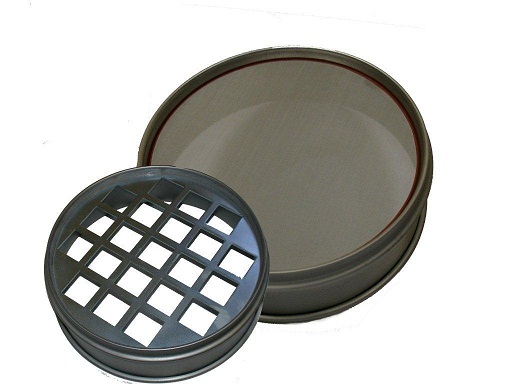
Laboratory test sieves are instruments used for particle size analysis and gradation testing.They are designed to separate particles of a material based on their size, allowing for the determination of particle size distribution and other material properties. This is crucial in various industries, including construction, agriculture, and environmental science.
Here’s a more detailed look:
-
Particle Size Analysis:
Sieves are used to measure the size of particles in a sample by separating them based on their ability to pass through specific apertures.
-
Gradation Testing:
By determining the distribution of particle sizes, sieves help assess the quality and suitability of materials for various applications.
-
Sample Preparation:
Sieves can be used to prepare samples for further analysis or testing by separating desired particle size fractions.
-
Construction:
Sieve analysis is used to determine the gradation of aggregates for concrete, asphalt, and other construction materials.
-
Agriculture:
Sieves are used to analyze the particle size distribution of soils and other agricultural materials.
-
Environmental Science:
Sieves help in the analysis of sediments, soils, and other materials in environmental studies.
-
Other Industries:
Sieves are also used in the food, pharmaceutical, and chemical industries for various applications, including particle size control and quality assurance.
- A stack of sieves with progressively smaller apertures is used.
- The sample is placed on the top sieve and shaken, causing particles to pass through the apertures of the sieves based on their size.
- The material remaining on each sieve is weighed, allowing for the determination of the particle size distribution.
-
Cost-effective:
Sieve analysis is a relatively inexpensive and simple method for particle size determination.
-
Fast:
The process can be relatively quick, especially when using mechanical sieve shakers.
-
Reproducible:
With proper techniques and standardized sieves, results are generally accurate and reproducible.
-
Versatile:Sieves can be used to analyze a wide variety of materials and particle sizes.
CLEANING OF TEST SIEVES:
Fine mesh test sieves should be cleaned after each use to prevent contamination and ensure accurate results. For finer mesh sieves, gentle brushing with a soft bristle brush, potentially followed by an ultrasonic cleaner, is recommended. Sieves from #5 to #170 are best cleaned with a medium stiff bristle brush or a fine sieve cleaning brush. Finer mesh sieves from #200 to #270 should be cleaned with a soft bristle brush to avoid damaging the cloth. Be sure you use a light touch on finer mesh sizes so you don’t damage the cloth.
- Turn the sieve over a receiving pan: This allows you to catch any particles that fall out during cleaning.
- Gently brush the underside of the mesh: Use a soft bristle brush (nylon is often recommended) in a circular motion to dislodge particles.
- Tap the sieve frame: Gently tap the frame with the brush handle to dislodge particles that may be stuck to the frame.
-
Ultrasonic cleaning:
If particles are difficult to remove with brushing, an ultrasonic cleaner can be very effective.
-
Mild detergent solution:
Immerse the sieve in a solution of warm water and a mild detergent before ultrasonic cleaning.
-
Proper ultrasonic cleaner usage:
Ensure the sieve is positioned correctly in the ultrasonic cleaner (mesh side closest to transducers) and that the cleaning solution is degassed for optimal cleaning.
-
Rinse thoroughly:
Rinse the sieve with clean water after brushing or ultrasonic cleaning to remove any remaining cleaning solution.
-
Air dry or use compressed air:
Allow the sieve to air dry or use a gentle stream of compressed air to dry the mesh.
-
Avoid excessive force:
Do not use excessive force or harsh chemicals when cleaning, as this can damage the mesh.
- Store in a clean, dry place: Protect the sieves from dust and moisture to prevent corrosion or damage.
- Avoid stacking if possible: If stacking is necessary, ensure the sieves are stacked carefully to avoid damaging the mesh.
The 75mm, 100mm and 200mm test sieves that are supplied with full-depth (50mm) stainless steel frames, half height (25mm) frames and brass frames also available.
The 300mm and 450mm test sieves are supplied with full depth (100mm) mild steel frames, they are also available in Stainless Steel frames. We also manufacture RHPP (round hole plated) apertures.
Mesh apertures are manufactured of stainless steel and plated (SHPP) apertures are manufactured of electroplated mild steel.
A full range of diamond sieves available in 200mm diameter.
All apertures from 20um (Micron) up to 212um (Micron) has protective backing of 1.0mm as standard.
Features:
- All test sieves individually calibrated and supplied with a Certificate of Examination/Verification Certificate – conforms to ISO/SABS standard
- All products are ISO certified (SABS ISO 3310-1-2000 & Part 2-1999).
- True sizes
- 75mm test sieves, apertures available up to 19,0mm Mesh
- 100mm test sieves, apertures available up to 19,0mm Mesh
- 200mm test sieves, apertures available up to 120,0mm
- 300mm test sieves, apertures available up to 150,0mm
- 450mm test sieves, apertures available up to 250,0mm
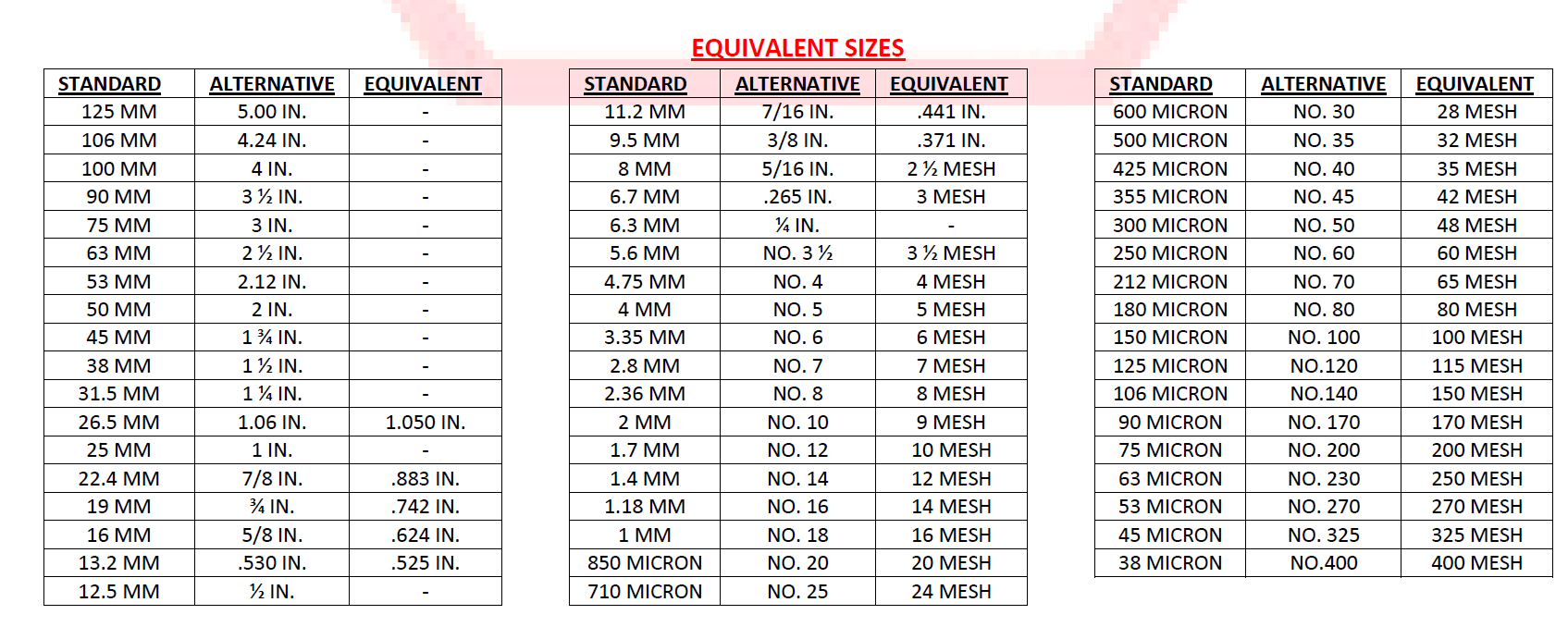
| Mesh Sizes | Plate (SHPP) Sizes |
| 20 micron (0.020mm)
25 micron (0.025mm) 32 micron (0.032mm) 38 micron (0.038mm) 45 micron (0.045mm) 50 micron (0.05mm) 53 micron (0.053mm) 63 micron (0.063mm) 75 micron (0.075mm) 80 micron (0.08mm) 90 micron (0.09mm) 100 micron (0.1mm) 106 micron (0.106mm) 125 micron (0.125mm) 150 micron (0.15mm) 160 micron (0.16mm) 180 micron (0.18mm) 200 micron (0.2mm) 212 micron (0.212mm) 250 micron (0.25mm) 300 micron (0.3mm) 315 micron (0.315mm) 355 micron (0.355mm) 400 micron (0.4mm) 425 micron (0.425mm) 500 micron (0.5mm) 600 micron (0.6mm) 710 micron (0.71mm) 800 micron (0.8mm) 850 micron (0.85mm) 1.0 mm (1000um) 1.18 mm (1180um) 1.25 mm (1250um) 1.4 mm (1400um) 1.5 mm (1500um) 1.6 mm (1600um) 1.7 mm (1700um) 1.8mm (1800um) 2.0 mm (2000um) 2.36 mm (2360um) 2.5 mm (2500um) 2.8 mm (2800um) 3.0 mm (3000um) 3.15mm (3150um) 3.35 mm (3350um) 3.5 mm (3500um) 4.0 mm (4000um) 4.75 mm (4750um) 5.0 mm (5000um) 5.6mm (5600um) 6.0 mm (6000um) 6.3 mm (6300um) 6.7 mm (6700um) 8.0 mm (8000um) 9.5 mm (9500um) 13.2 mm (13200um) 16.0 mm (16000um) 19.0mm (19000um) |
3.5 mm (3500um)
4.75 mm (4750um) 5.0 mm (5000um) 5.6 mm (5600um) 6.3 mm (6300um) 6.5 mm (6500um) 6.7 mm (6700um) 7.0 mm (7000um) 7.1 mm (7100um) 8.0 mm (8000um) 9.0mm (9000um) 9.5 mm (9500um) 10.0 mm (10000um) 11.2 mm (11200um) 12.0 mm (12000um) 12.5 mm (12500um) 13.2 mm (13200um) 14.0 mm (14000um) 15.0 mm 915000um) 16.0 mm (16000um) 18.0 mm (18000um) 19.0 mm (19000um) 20.0mm (20000um) 22.4 mm (22400um) 25.0mm (25000um) 26.5 mm (26500um) 28.0 mm (28000um) 30.0 mm (30000um) 31.5 mm (31500um) 35.0 mm 935000um) 37.5 mm (37500um) 40.0 mm (40000um) 45.0 mm (45000um) 50.0 mm (50000um) 53.0 mm (53000um) 60.0 mm (60000um) 63.0mm (63000um) 65.0 mm (65000um) 70.0 mm (70000um) 73.0 mm (73000um) 75.0 mm (75000um) 80.0 mm (80000um) 85.0 mm (85000um) 90.0 mm (90000um) 100.0 mm (100000um) 125.0 mm (125000um) 130.0 mm (130000um) 150.0 mm (150000um) 180.0 mm (180000um) 200.0 mm (200000um)
|
 LID & RECEIVER

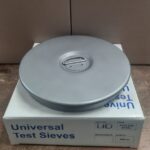
WET WASHING RECEIVER

WET WASHING TEST SIEVE

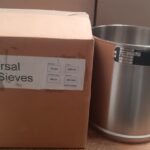
BRASS TEST SIEVE
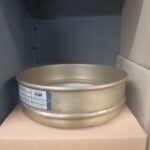
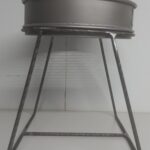
SIEVE STAND